

Mineral and Heavy Metal Testing
What's inside your cells?
Get a clearer picture of the minerals your body is running on and the heavy metals that may be getting in the way. Our intracellular mineral and heavy metal test uses a quick, painless, non-invasive scan of your palm, with initial results available immediately.
Our Approach
Sometimes,the answers aren'tin your blood.
Sometimes, two things are happening at once
Modern life has changed the environment and with it, the raw materials your body has to work with.
On one side, our food carries fewer minerals than it did two generations ago. Our water, air, and soil are polluted, and that soil is farmed harder and rested less. Even a careful diet can leave you short on the magnesium, zinc, or iodine your body depends on to keep you balanced and well.
On the other side, we are absorbing elements the body was never designed to store. Aluminum in cookware and personal care products. Mercury from older dental work and certain fish. Cadmium from smoke and exhaust. Antimony from plastic bottles left in a warm car. Usually, we consume these toxins in very small amounts throughout our lives, so we are unaware of the damage they cause, until the accumulated damage starts to show.
Your body works hard to eliminate those toxins and keep you balanced. However, if we overwhelm our body with too many toxins, what it cannot clear, it stores, and it stores it out of the way, in tissue, where it will do the least immediate harm.
That storage is often invisible on most tests, but it is exactly what this scan is designed to see.
Why intracellular testing
Why the cell is the place to look
Think of your body as a house with a delivery system, a waste system, and a set of rooms where things actually get used.
01
Blood is the delivery truck.
It shows what is moving through right now. Your body works hard to keep the levels in your blood steady and balanced, so a blood test can look perfectly normal even when the minerals inside the rooms are running low.
02
Hair and urine are the garbage going out.
They show what your body has managed to get rid of over the past weeks or months. It is useful, but if your ability to clear metals is impaired, very little shows up, and the test reads as reassuring for the wrong reason.
03
The cell is the destination.
It is where minerals are put to work and where metals settle in. It is the one place that tells you what your body has actually taken in and kept.
This scan reads that third place. Specifically, it shows the intracellular uptake of minerals through the tissue, including muscle and small capillaries, at a depth of about 4mm through the skin.
Book Your ScanHow it works
A minute of light.A deeper look within.
The scan uses spectrophotometry, a way of measuring matter with light.
Every element has its own signature, absorbing and reflecting light in its own particular way. Calcium absorbs light differently than magnesium; mercury differently than lead. And the more of an element there is, the more of its particular light gets absorbed. This is a relationship physicists established more than two centuries ago with the Beer-Lambert Law and have relied on ever since. It is the same principle astronomers use to identify what a distant star is made of, and the same principle a laboratory uses to identify a chemical sample.
With this scan, a small handheld sensor rests on the palm of your hand and sends a beam of light a few millimeters into the tissue. Some of that light is absorbed. Some comes back. The pattern of what returns is read against established reference ranges, and it tells us which elements are present and in what proportion.
Four readings are taken on the palm of your non-dominant hand. The palm is used for two reasons: it has the same pigmentation in every person, regardless of skin tone, so nothing skews the reading, and the hands are among the body's busiest crossroads for circulation and elimination.
What we test
What the scanshows you
The relationships between them are where the real answer lies. Minerals do not work alone. They compete and support one another, and they occupy the same doorways into the cell. For example, copper and zinc sit on a seesaw. Fluoride and iodine compete for the same receptor. Mercury interferes with the absorption of vitamin D.
This is why a single low number rarely tells the story, and why “just take more of it” so often fails. If a metal is sitting in the doorway, blocking it, you can supplement a mineral for years and never get it where it needs to go. The scan shows whether you are genuinely short of something, or whether something is standing in the way.
21 minerals and trace elements
These minerals and trace elements support functions including energy, hormones, immune response, and detoxification.
Including:
- Magnesium
- Zinc
- Iodine
- Selenium
- Chromium
- Iron
- Lithium
- Calcium
- Silicon
- Phosphorus
- Sodium
16 heavy metals
Including:
- Aluminium (Al)
- Antimony (Sb)
- Silver (Ag)
- Arsenic (As)
- Barium (Ba)
- Beryllium (Be)
- Bismuth (Bi)
- Tin (Sn)
Seven vitamin indicators
Including:
- Vitamin A
- Vitamin B6
- Vitamin B9
- Vitamin B12
- Vitamin C
- Vitamin D
- Vitamin E
Your appointment
One simple scan.A much bigger picture.
Your Health Questionnaire.
Before your scan, we’ll inquire about factors that could influence your results, such as your hydration, dental history, occupation, cookware, supplements, stress levels, and sleep patterns, and your height, weight, date of birth, and blood type, as the latter is essential for calculating reference ranges.
Who it's for
When "normal" doesn'ttell the whole story.
This assessment may be useful if:
- You don't feel well, but your standard lab work keeps coming back normal.
- You're experiencing fatigue, brain fog, stubborn weight, hormone or thyroid symptoms, or persistent digestive concerns.
- You've been taking supplements consistently but can't tell whether they're helping.
- You're preparing to begin a detoxification or nutritional protocol and want a measurable starting point.
- You have known exposure through older amalgam fillings, industrial or trade work, well water, years of bottled water, or repeated MRI contrast.
- You feel well and want to take a more proactive approach to staying that way.
Beyond the scan
Your results areonly the beginning.
The scan gives us a clearer starting point. From there, we can track change, understand your results in context, and look at your health as part of a bigger picture.
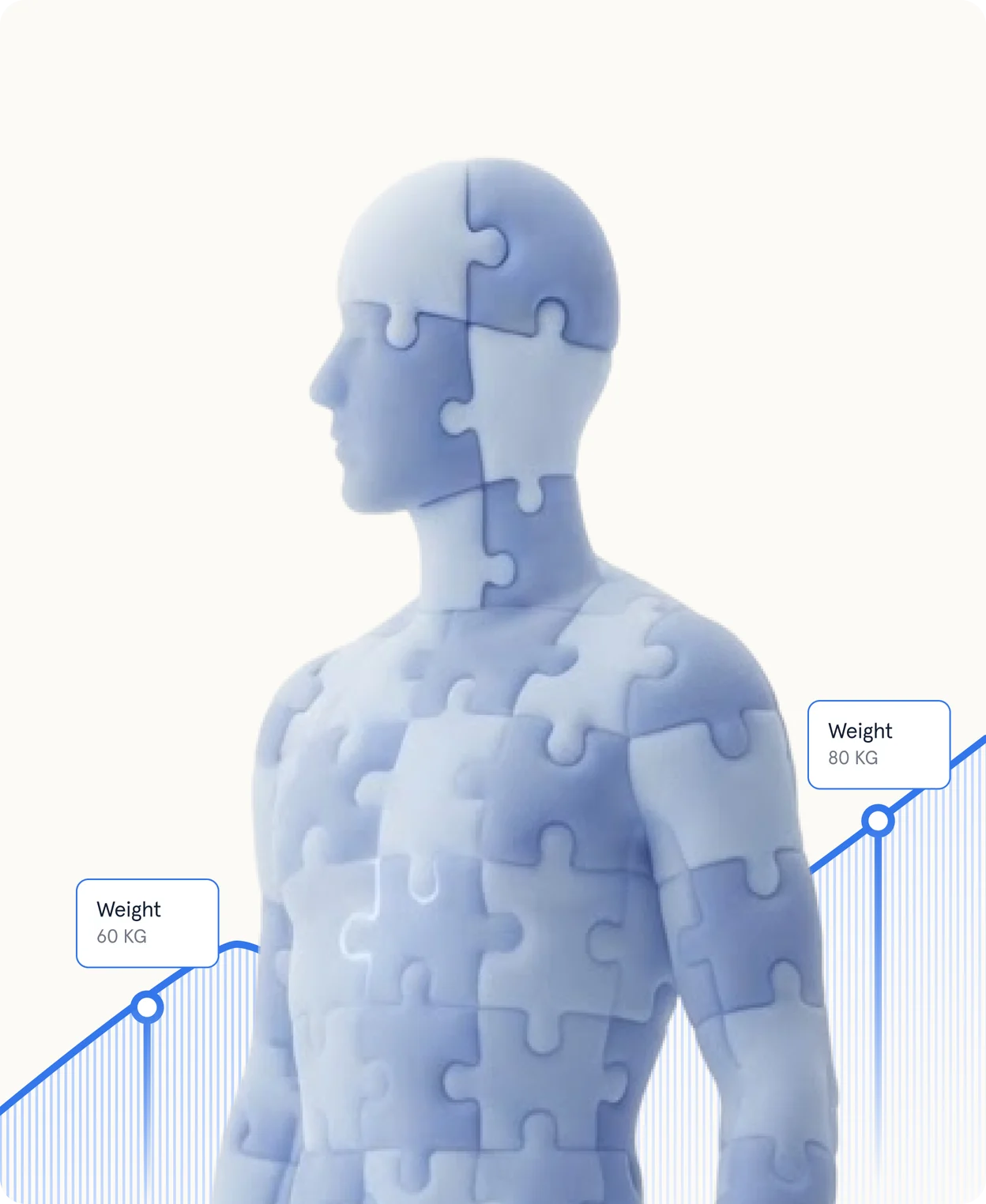
01 — Track Your Progress
Don't just make changes. See if they're working.
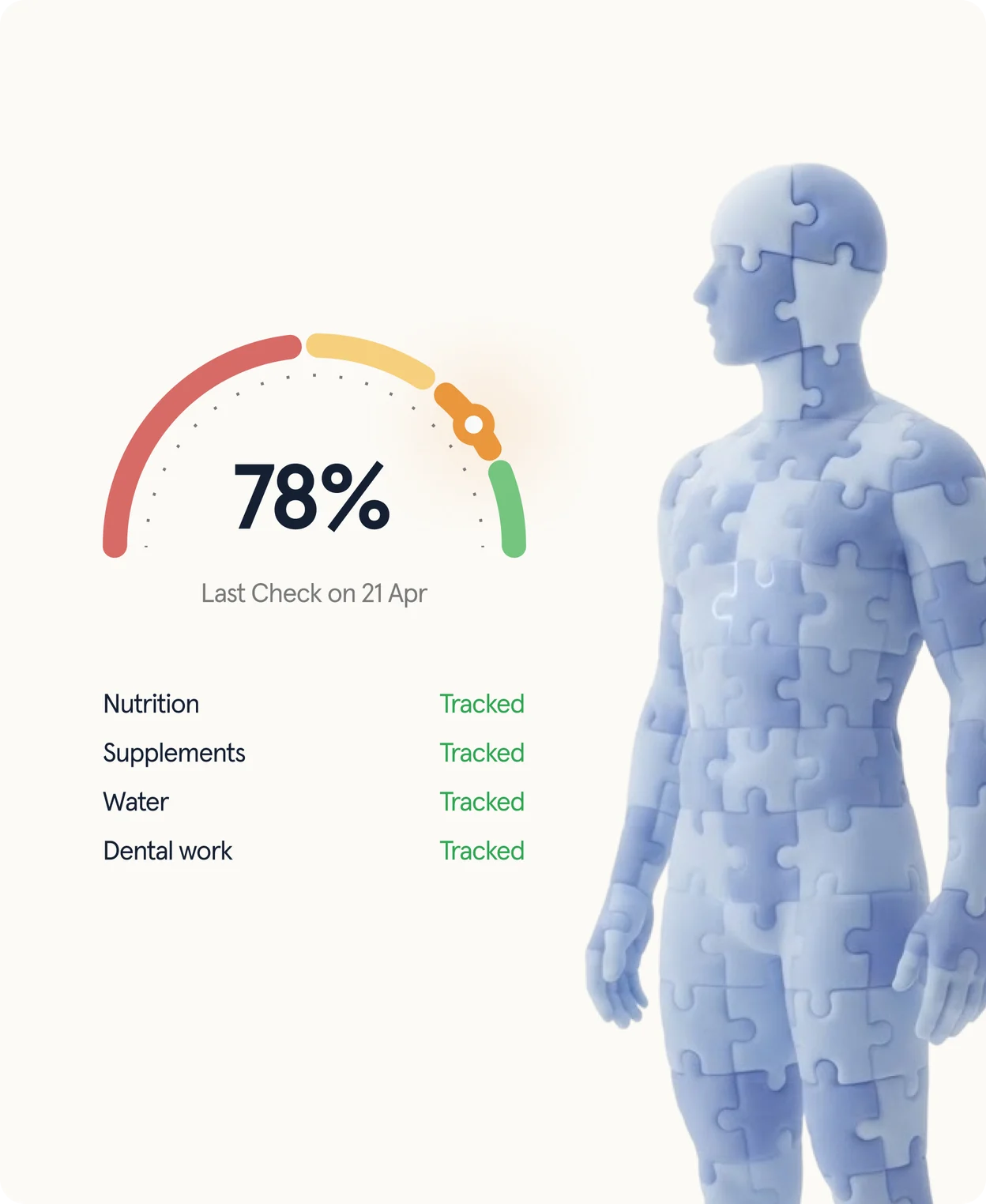
One scan gives you a snapshot. Follow-up scans allow us to compare your results over time and see whether changes to your nutrition, supplements, water, dental work, or other aspects of your routine are actually registering in your tissue.
We recommend repeating the scan four to eight weeks after beginning your recommended changes.
02 — Understand the Bigger Picture
One piece of a more complete health picture.
This scan is a nutritional and exposure assessment designed to identify patterns, trends, and outliers in mineral status, heavy metal load, and the relationships between them. It is not a diagnosis and does not replace blood work, imaging, or other recommended testing. It also cannot determine the amount of a particular metal within a specific organ.
Small variations between scans are normal, so we focus on overall patterns rather than individual numbers. Used alongside your history, symptoms, and other results, the scan provides another piece of information to help us understand your health more completely.
03 — Look Beyond the Numbers
Health is more than a set of results.
Minerals and metals give us a measurable view of the physical layer of your health. But physical health doesn't exist in isolation. Stress and emotional well-being can also influence how the body functions, rests, and repairs.
We begin with the physical because it gives us something tangible to measure. For patients looking for a broader view of their well-being, our comprehensive wellness assessment also considers physical, emotional, and spiritual layers.

Mineral and Heavy Metal Testing
Find out what you're working with.
FAQs
Have Questions?
No. A sensor simply rests on your open palm and reads light. You won't feel anything.
The scan itself usually takes less than a minute. Please allow additional time for the questionnaire beforehand and review of your results afterward.
You'll need to know your blood type before your appointment. It's used to calculate your reference ranges, and the scan cannot be run accurately without it.
No fasting is required. We'll let you know if anything needs to be adjusted before your appointment.
Your initial report is available the same day. Your comprehensive report is usually provided and reviewed with you within 48 hours.
Yes. Nothing enters your body and no electrical current is applied. The assessment can also be used during pregnancy to look at mineral status, when nutritional demands may increase.
Blood testing shows what's circulating in your bloodstream at that moment. Heavy metals can leave the bloodstream and settle into tissue within days. This scan looks at intracellular uptake through tissue rather than only what's currently circulating.
We recommend repeating the assessment four to eight weeks after beginning your recommended changes so there is enough time to evaluate whether your patterns have shifted.
No. Mineral and heavy metal testing is offered as a wellness assessment.

Dr. Avi Ishaaya Center
A New Era of Care
Together, we shall piece together your unique path to complete wellbeing, honoring every dimension of your health puzzle.